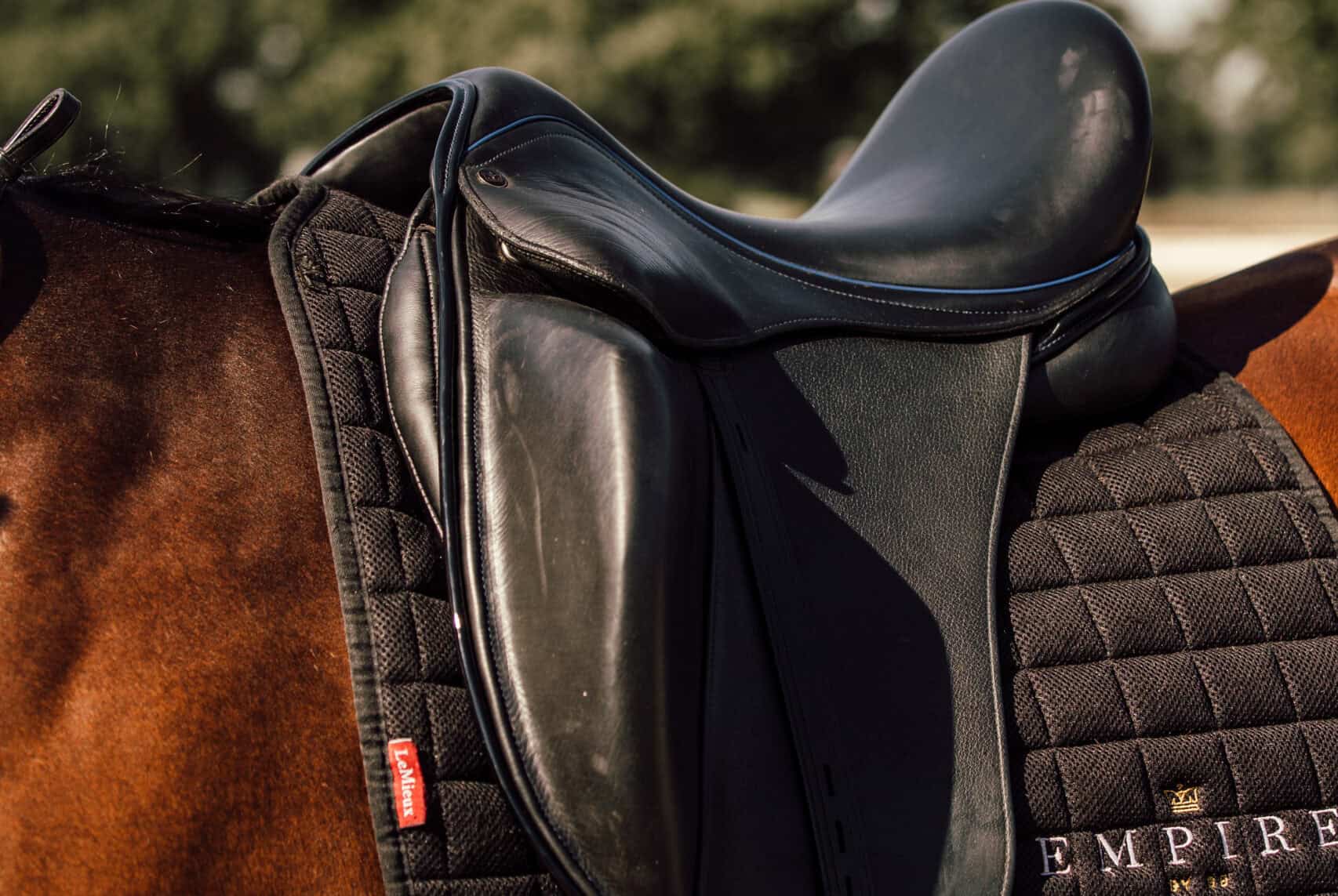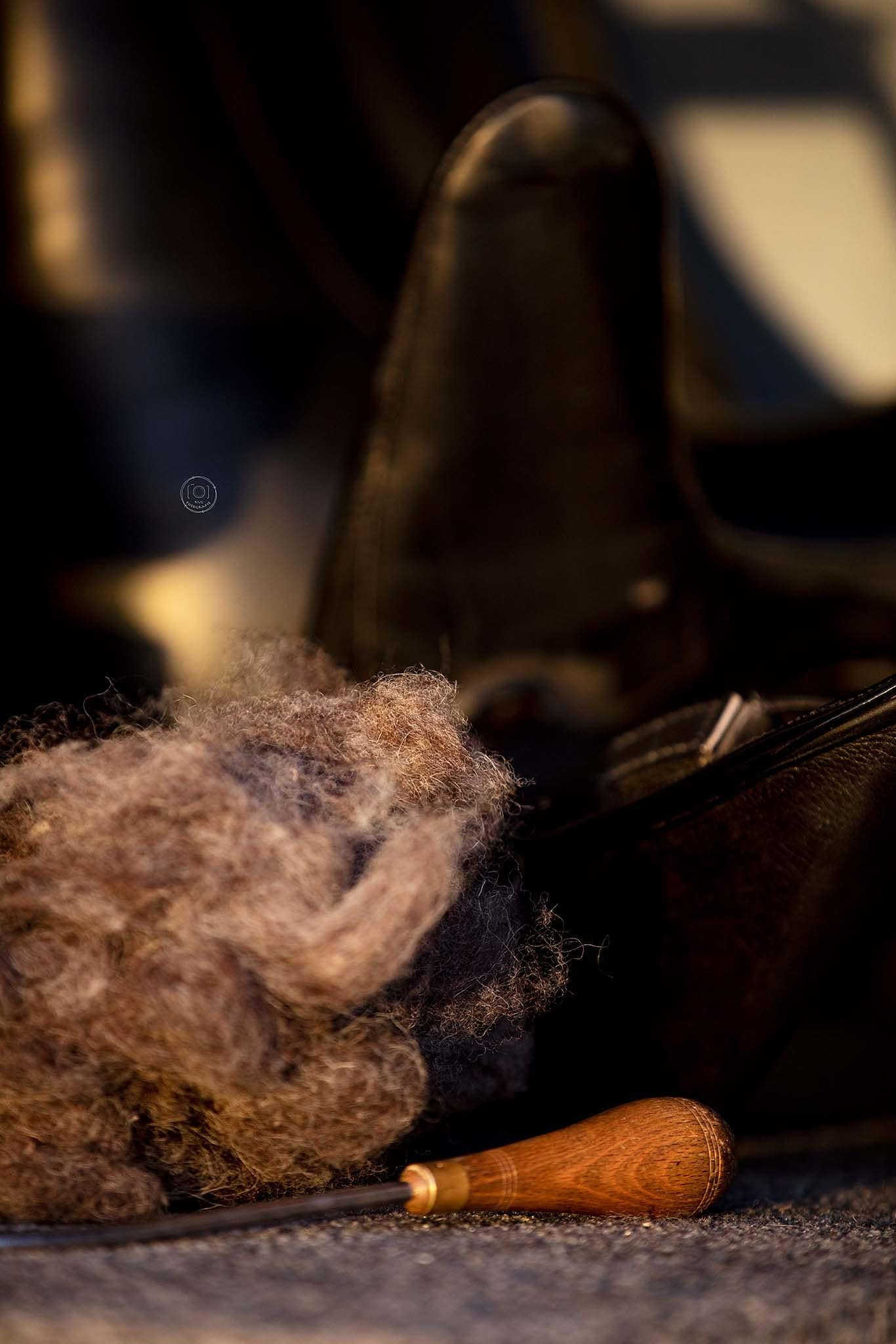
Why we at Empire Saddles consciously choose gray wool
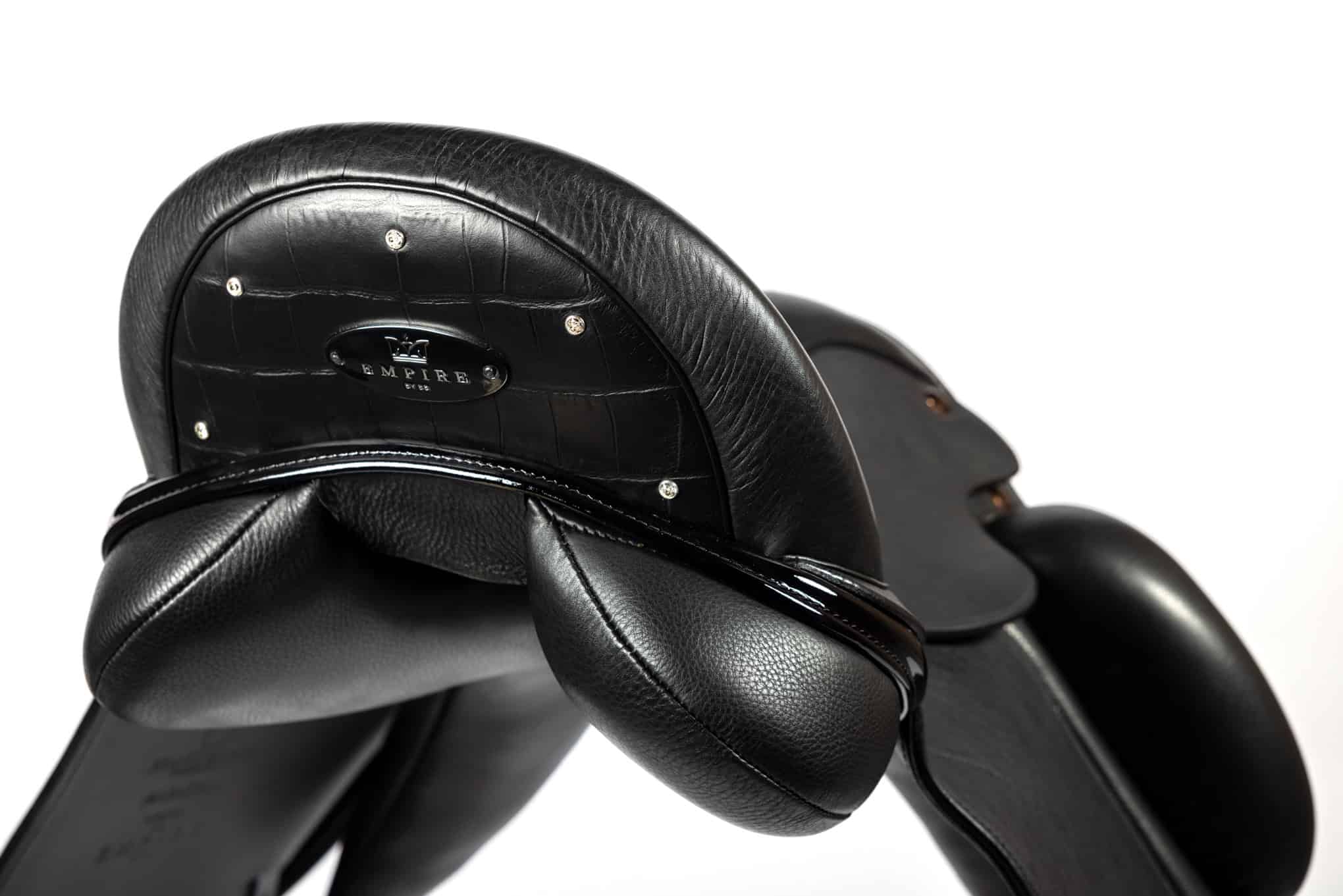
At Empire Saddles, we make daily choices that are not always visible, but do affect how a saddle behaves in use. One of those choices is in the filling of the saddle pads: sheep’s wool.
Sheep’s wool has long been used in saddle pads, and for good reason. The material absorbs shock, helps regulate temperature, wicks away sweat and can be adjusted as a horse changes over time. That makes wool practical and flexible – exactly what is needed in a well-fitting saddle.
Not all sheep’s wool is the same
What is less well known is that sheep’s wool does not always behave the same way. Within wool there are distinct differences, particularly between gray and white wool. Those differences play a role in how long a saddle retains its shape and support.
At Empire, we don’t just look at how a saddle feels on day one, but more importantly, how it holds up after months and years of use.
Why we choose gray wool
Gray wool is usually less processed than white wool. The wool is washed and carded, but otherwise remains close to the natural structure of the fiber. The gray color comes from natural variations in the sheepskin, not from bleaching or dyeing.
Because the fiber is treated less, gray wool remains more resilient. In practice, this means:
- the wool is less likely to collapse
- the cushions retain their shape longer
- support remains more stable
For saddles that are used regularly, this is a significant advantage.
What about white wool?
White wool is often finer and softer in texture. This may feel comfortable at first, but this wool compresses faster. As a result, reupholstering is usually needed sooner to restore the saddle to proper support.
That does not necessarily make white wool a wrong choice, but one that requires more frequent maintenance in the long run.
What does this mean for horse and rider?
The difference between gray and white wool is not in spectacular changes, but in subtle, long-lasting effects. Gray wool remains stable longer, supports more evenly and handles moisture better while riding.
These are exactly the characteristics we value as saddle fitters: no quick fixes, but materials that keep doing their job.
Small choices make the difference
A good saddle consists of many such details. They are not always noticeable, but they determine how a saddle functions in everyday use.
Our choice of gray sheep’s wool is one of them. Not because it sounds prettier, but because in practice it shows that it lasts longer and stays better supported – for both horse and rider.