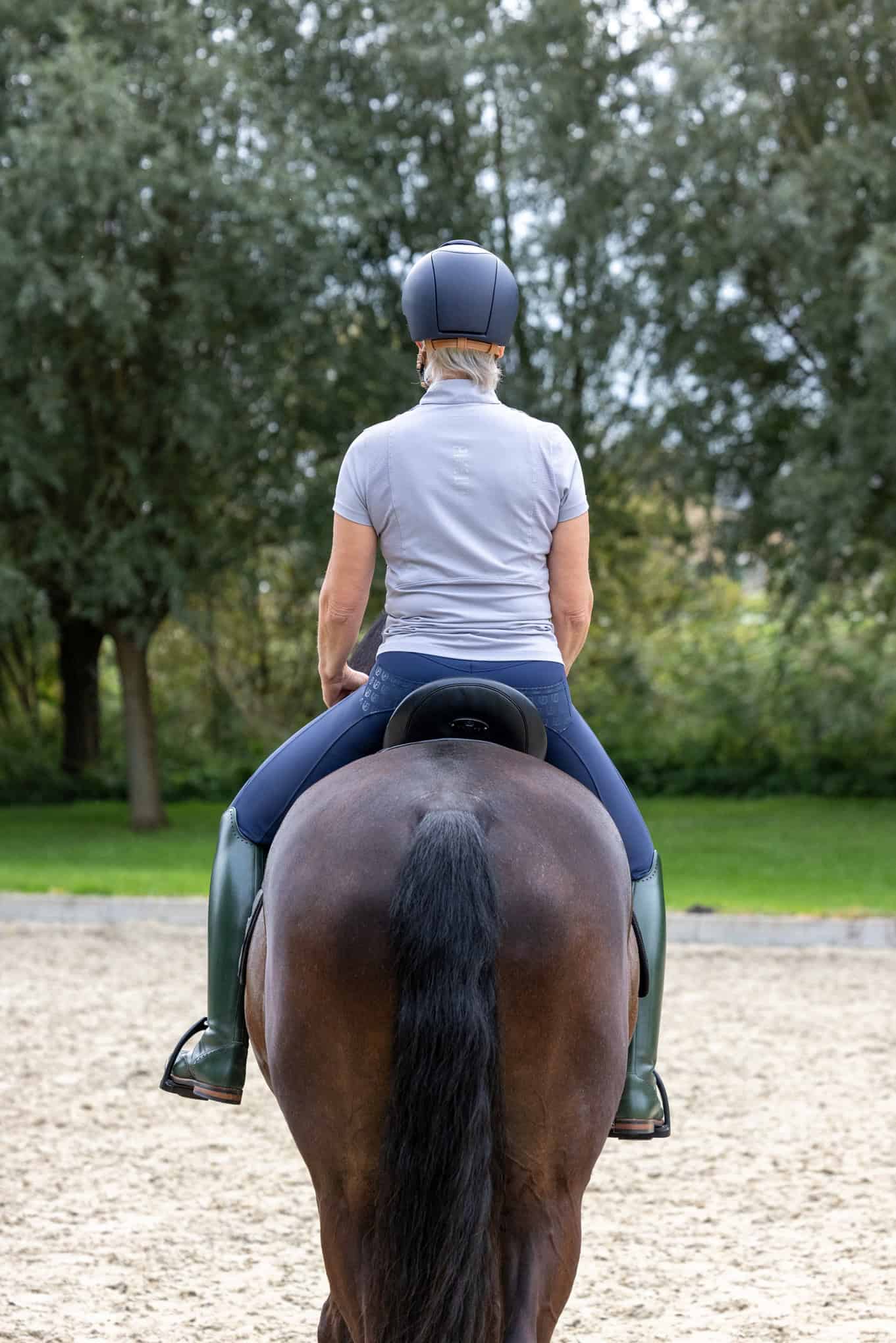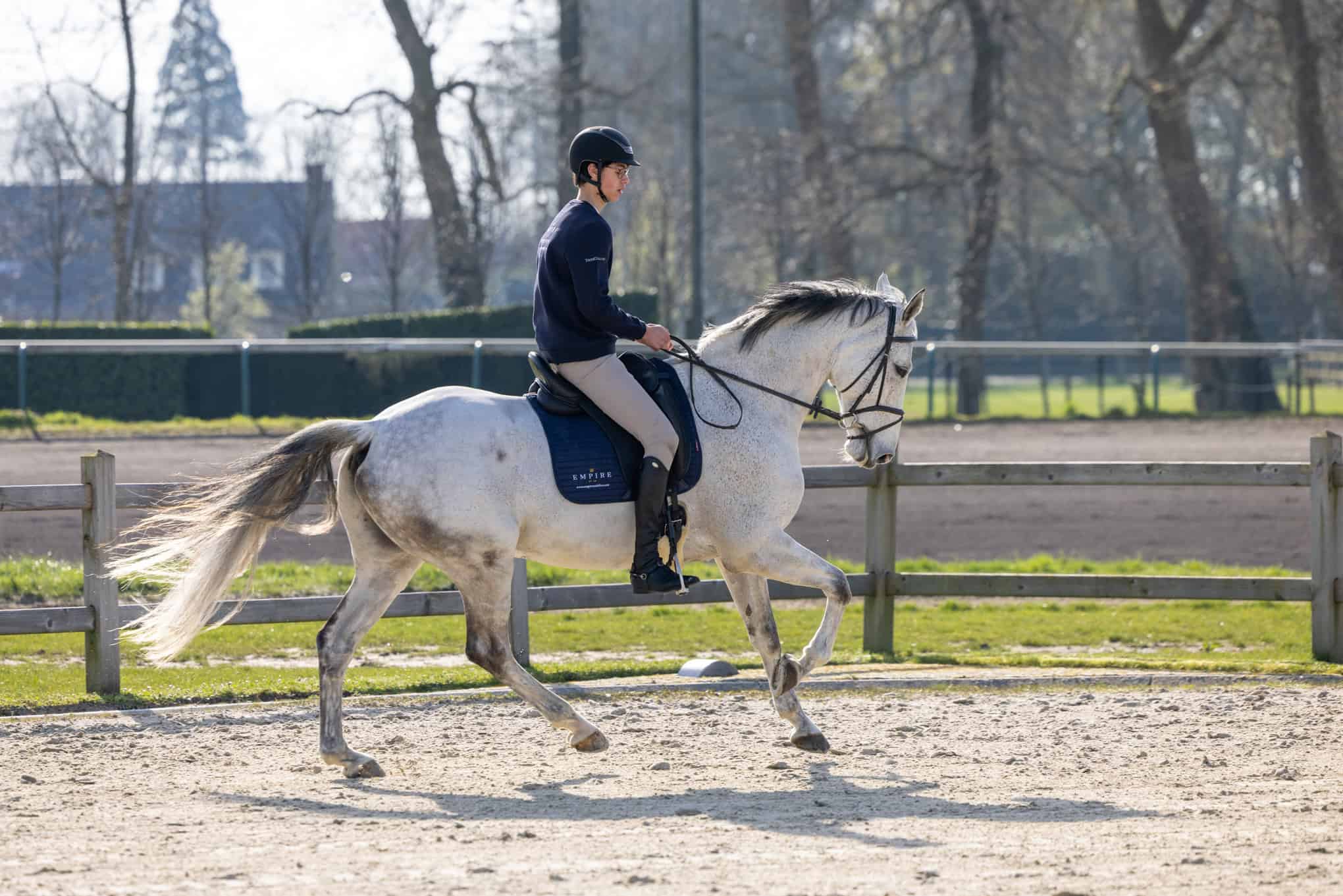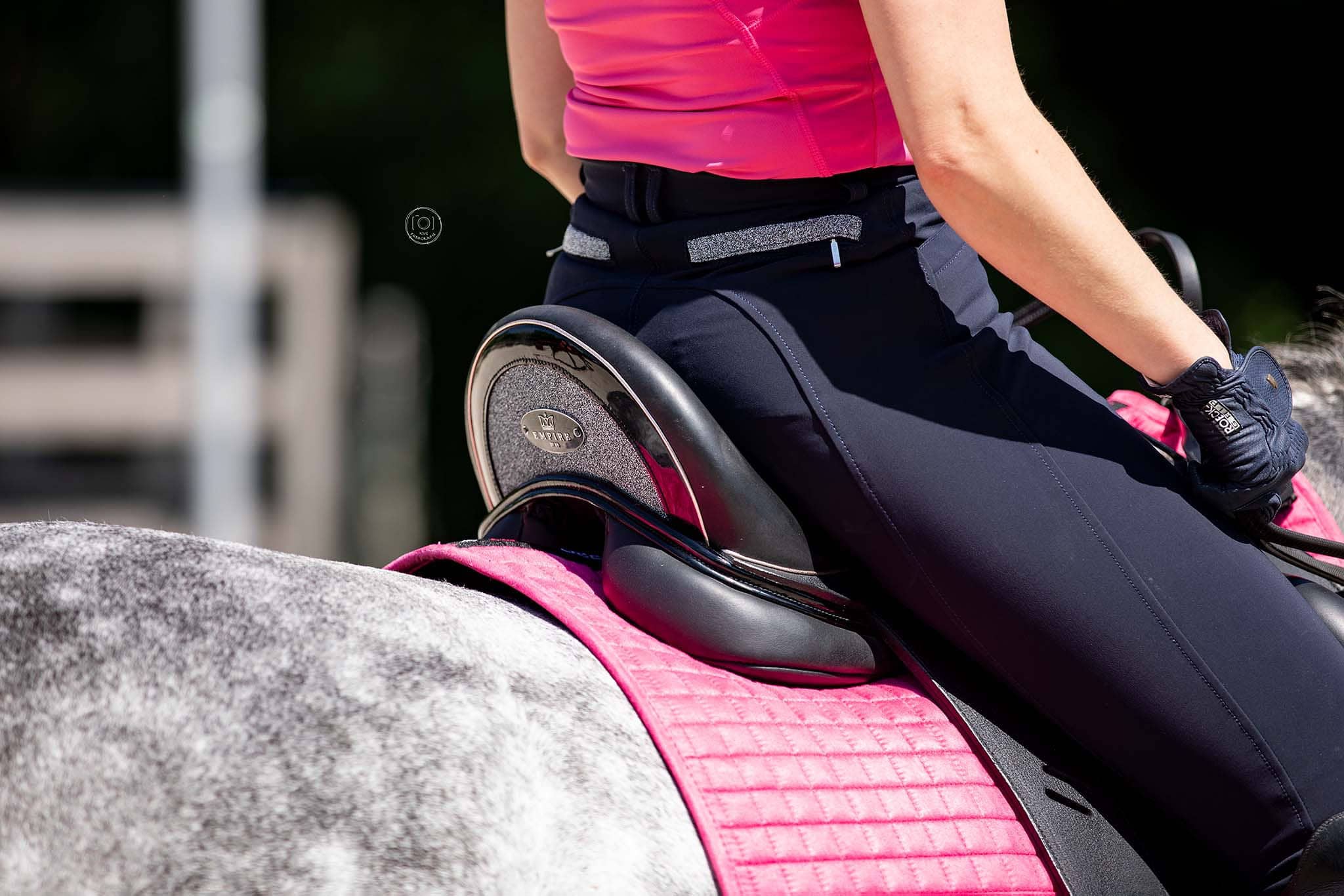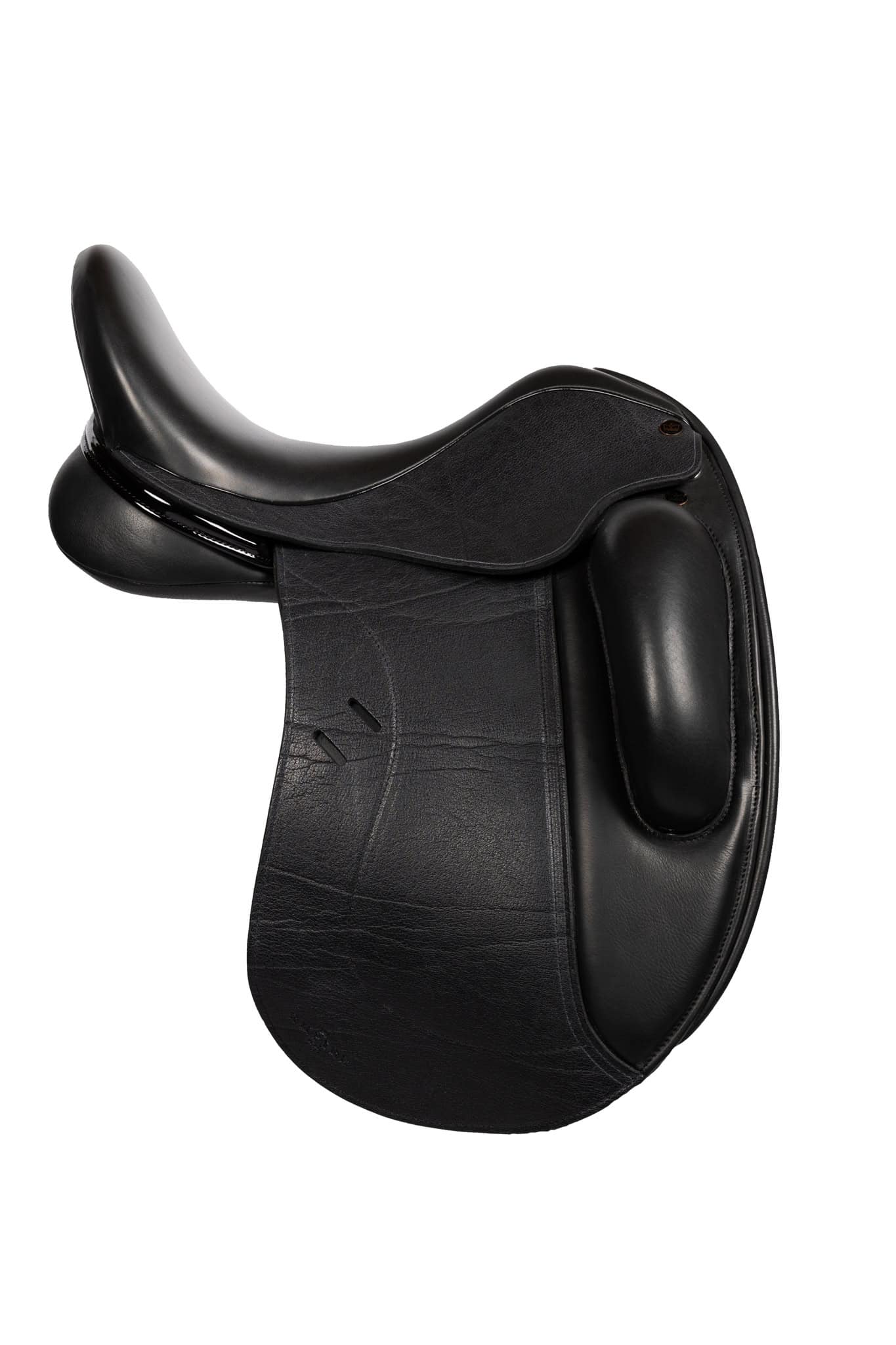
We’ve all experienced it before: a saddle that at first glance seems to lie fine: straight on the back, nicely balanced. But as soon as you start riding, it starts to clamp. Or worse: the saddle slowly but surely slides forward, towards the shoulder blades. And before you know it, you’re sitting more on the shoulder than on the back.
The solution? It seemed obvious:
“We need to provide more shoulder clearance!”
And then a search for solutions follows. Cut back room. Short tree tips. Extra room at the front. Making the saddle wider. A fur in between. Maybe even an anatomical girth. Anything to create that “freedom.
But what do we really mean by shoulder freedom?
Freedom begins with: a saddle that stays where it belongs
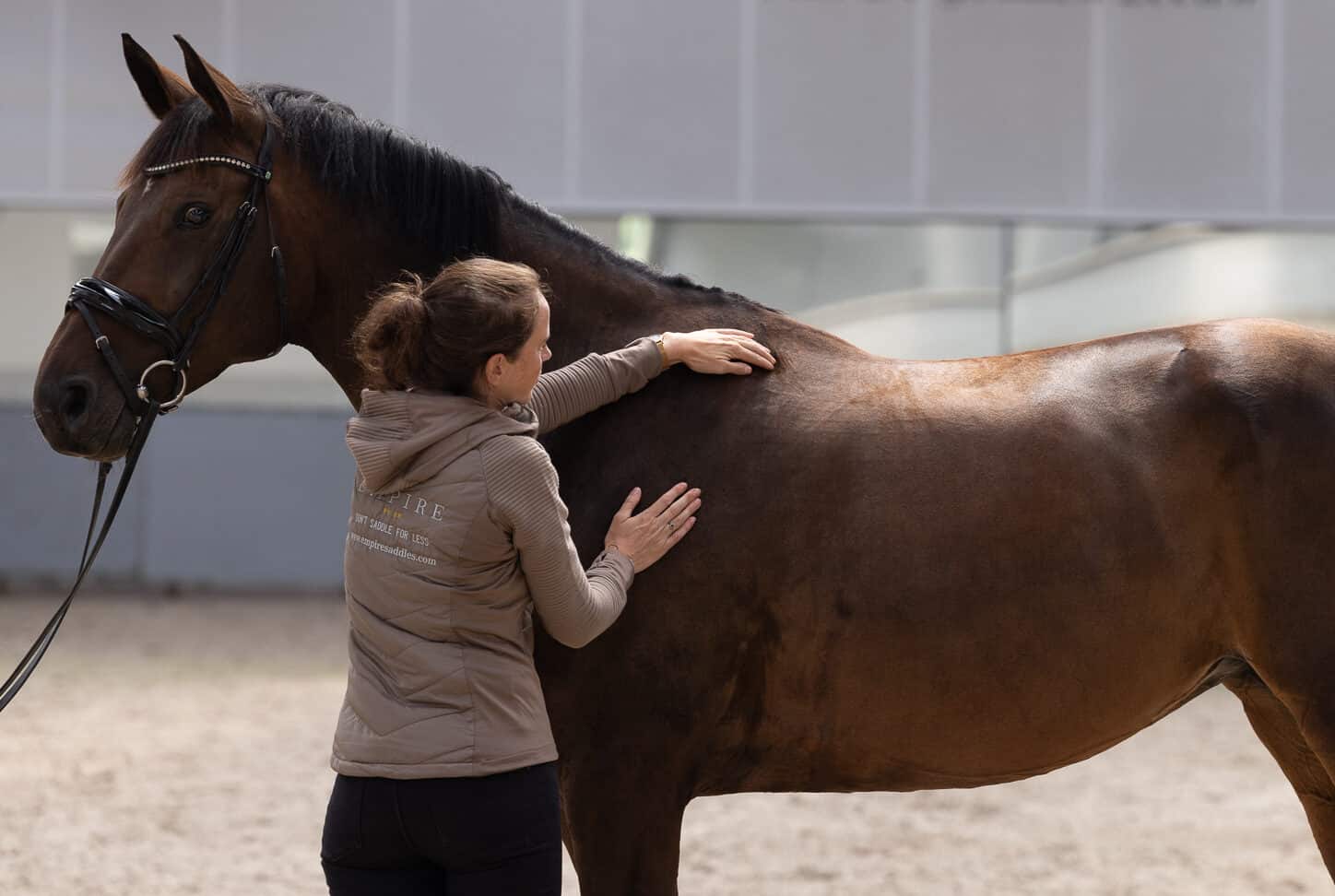
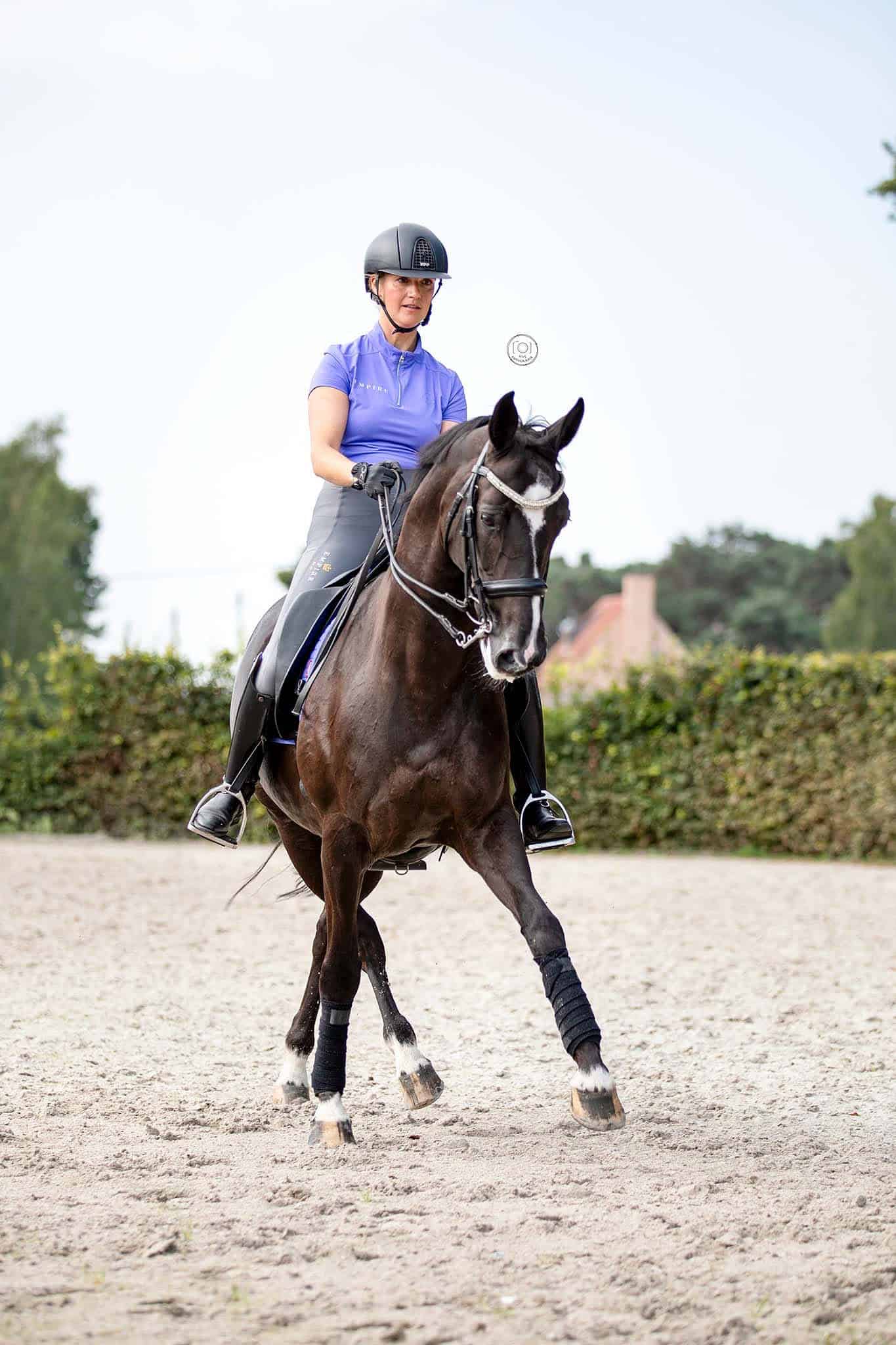
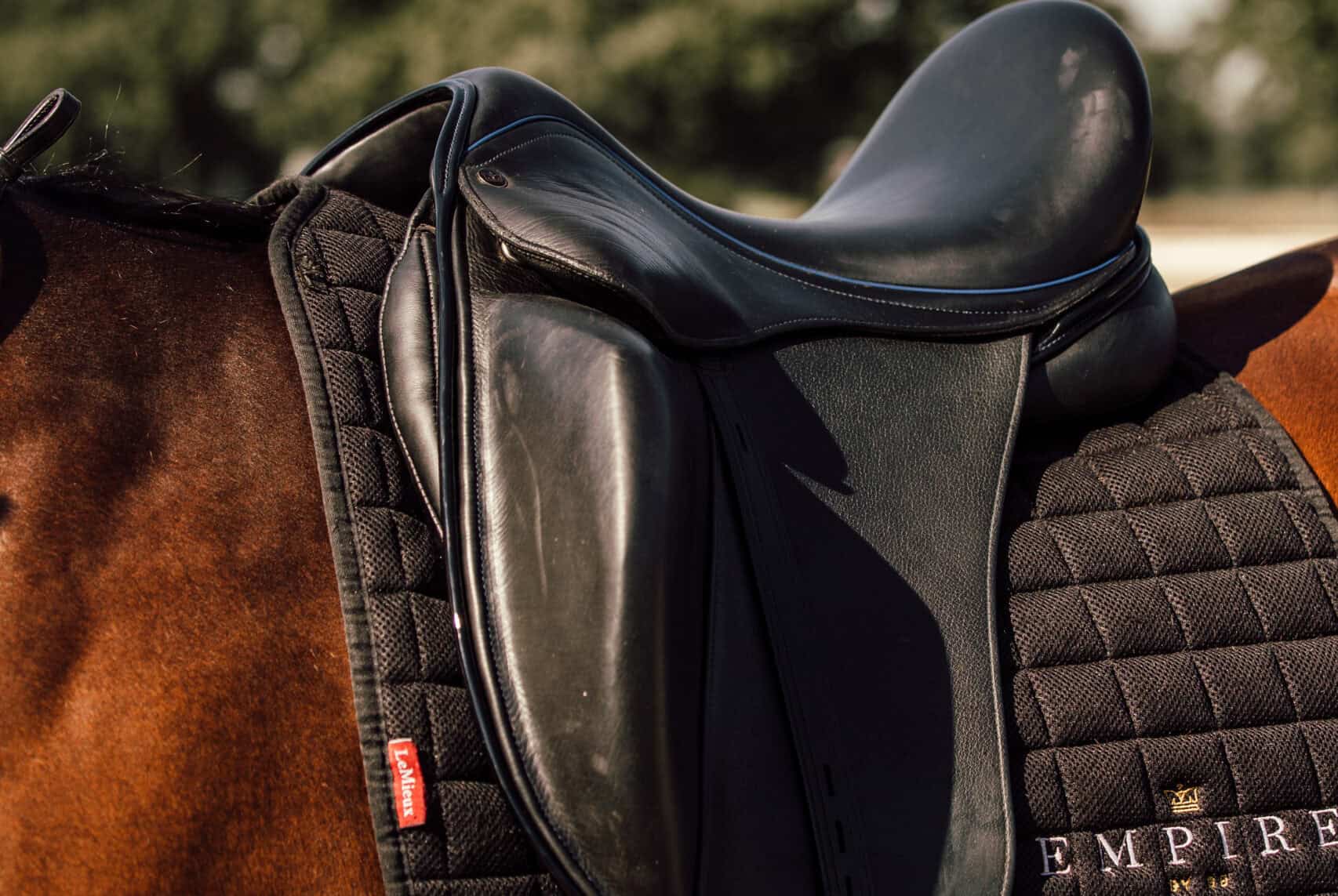
A saddle should be behind the shoulder. Not on it, not in front of it. And a horse deserves a saddle that stays in that spot during movement.
This will only succeed if all the parts are correct:
- a tree to match the shape of the back
- A tree size that matches the horse’s width
- A cushion channel and twist width to suit the horse
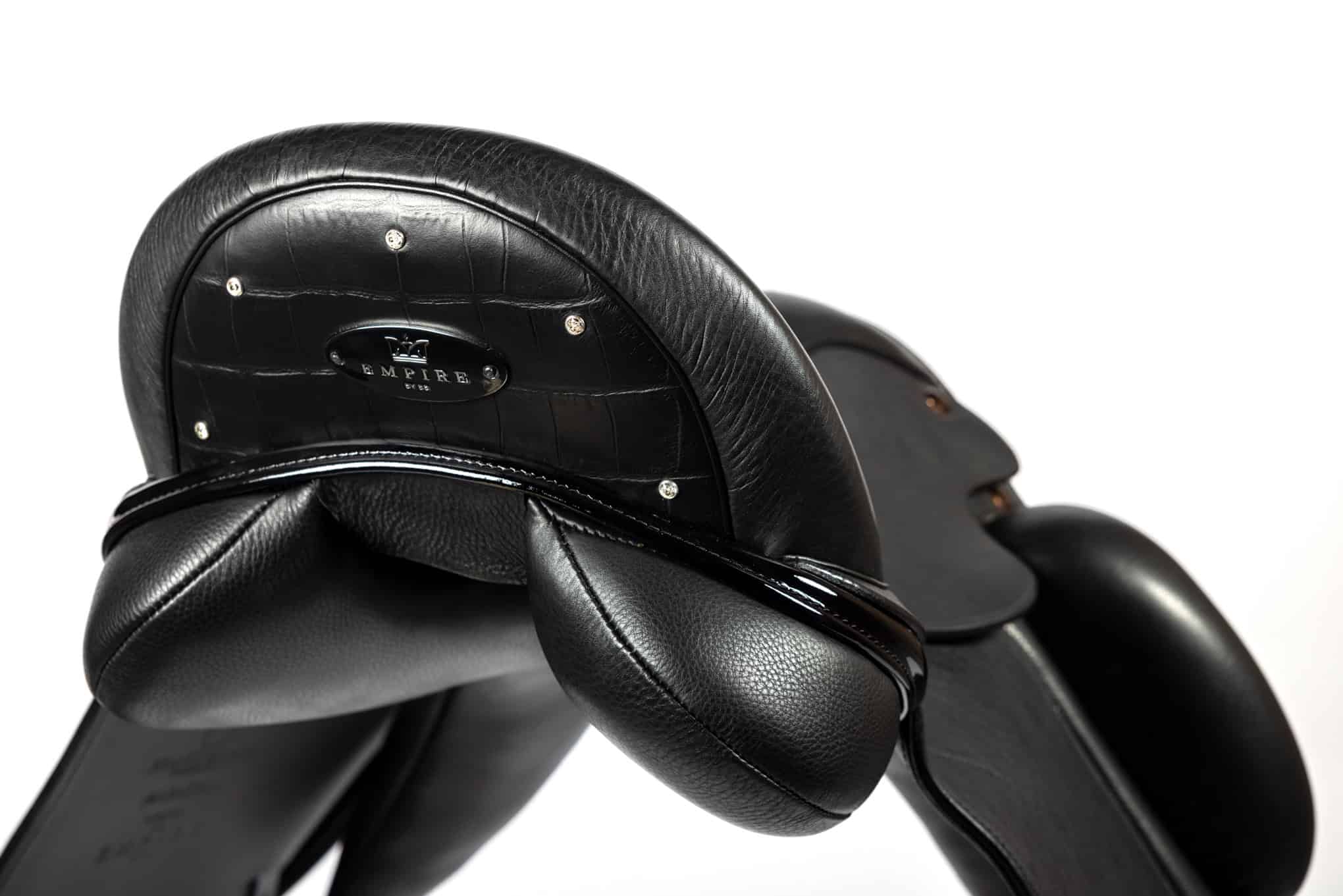
- cushions to fit both tree and horse back
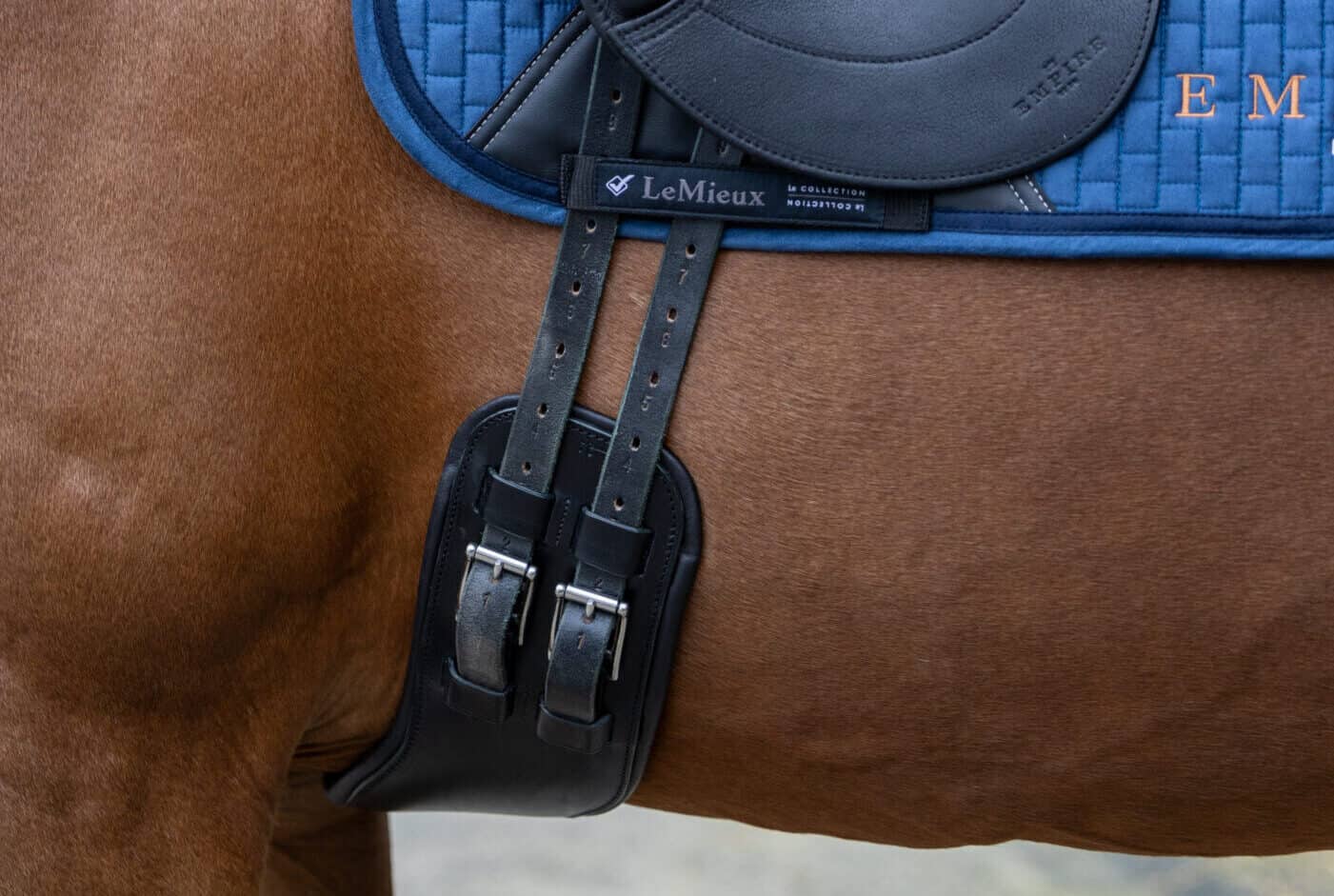
- and a girth system that keeps the saddle in place without causing tension
- and a horse that is physically capable of carrying the saddle properly (without compensation patterns due to neck, back or hindquarters problems, for example)
If that’s all correct? Then nothing needs to be “cleared” because it’s just right.
So why do things go wrong so often?
In practice, we see roughly three common causes:
- The saddle doesn’t fit (anymore)
Sometimes the tree is too narrow or just too wide. Or the tree shape does not fit the back. The padding is not right, or the girth system pulls the saddle askew. The result: the saddle sags or slides and comes to rest against the shoulder. - The horse has changed
Horses evolve. But the saddle often stays the same. What once lay perfectly may clamp or slide weeks or months later. Regular checking and adjustment are not a luxury, but a necessity. - Wrong design assumptions
To create shoulder clearance, recut or shorter tree points, or a wider tree size, are often chosen. But this is counterproductive. A properly designed tree point is always behind the scapula – even in motion – and should be long enough to span the withers from the rib arch. If the stump point is too short or the saddle is too wide, the saddle sags forward. And that very thing reduces shoulder clearance.
Some horses are just harder to fit
Although in most cases a well-fitting saddle will automatically provide shoulder freedom, there are some horses where it is just a little more complicated. For example:
- a horse with a lot of back use, “pushing” the saddle forward while riding
- a girth groove that is far forward, whereas the saddle should stay backward
- or a downward-built trunk direction, where saddles naturally slide forward more easily
In such cases, it is extra important to look carefully at all parts of the saddle: the shape of the tree, the width of the tree, the shape and padding of the cushions and the type of girth system.
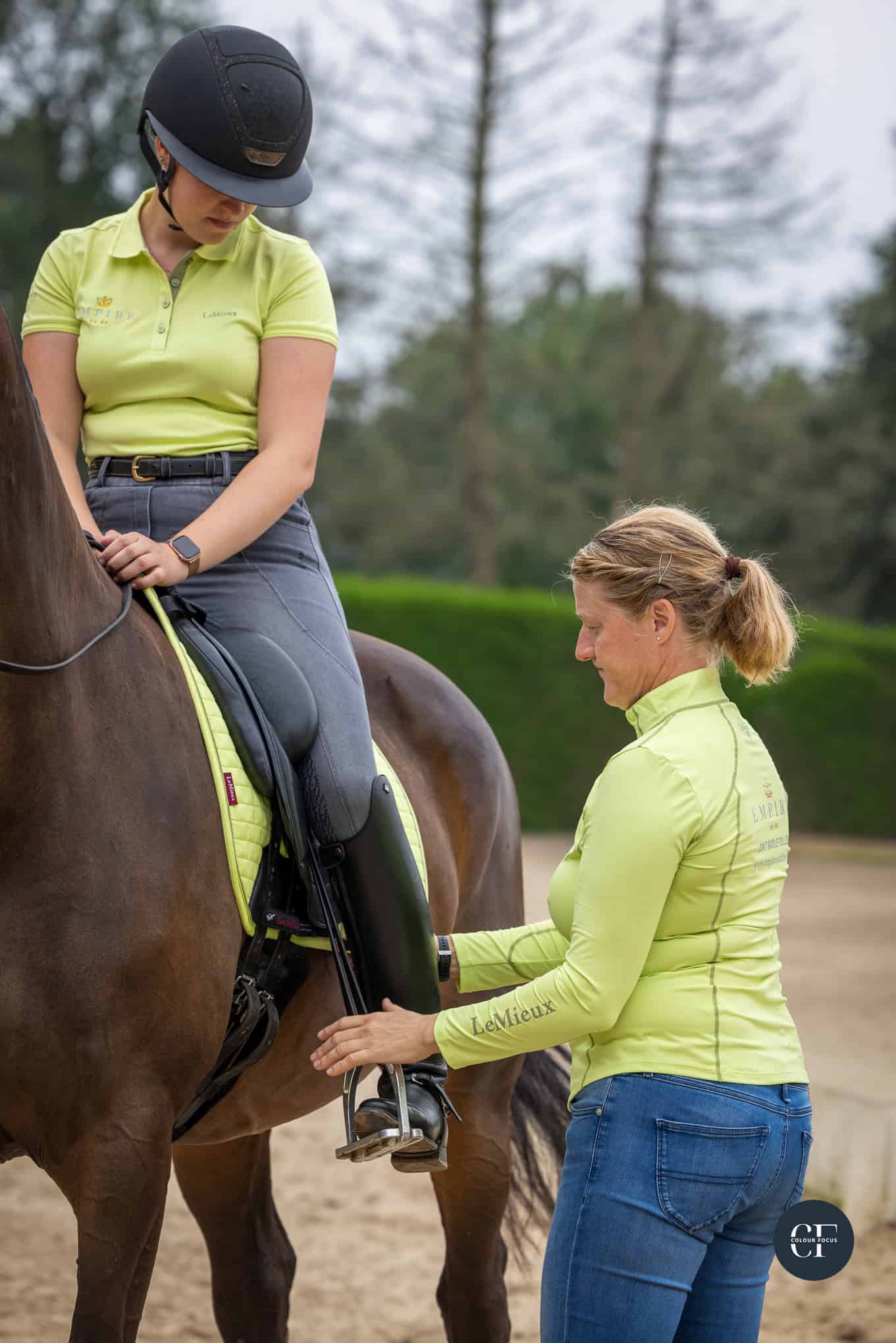
In situations like this, give your saddle fitter room to test and fine tune. Sometimes it takes some searching, and not everything is solved in one consultation. But with attention and precision, you often arrive at a solution that does work and gives the horse the freedom of movement it needs.